AfterFrame / Usage guide
Start with the
folders you have.
Import a shoot, make a selection, and finish the image without moving the originals somewhere else.
01 / Get started
Install, then choose a folder.
Download the latest DMG from GitHub Releases and move AfterFrame to Applications. When you first open it, create a catalog. It indexes your photos; it does not take ownership of them.
Download latest release ↓02 / Build a library
Import what you already have.
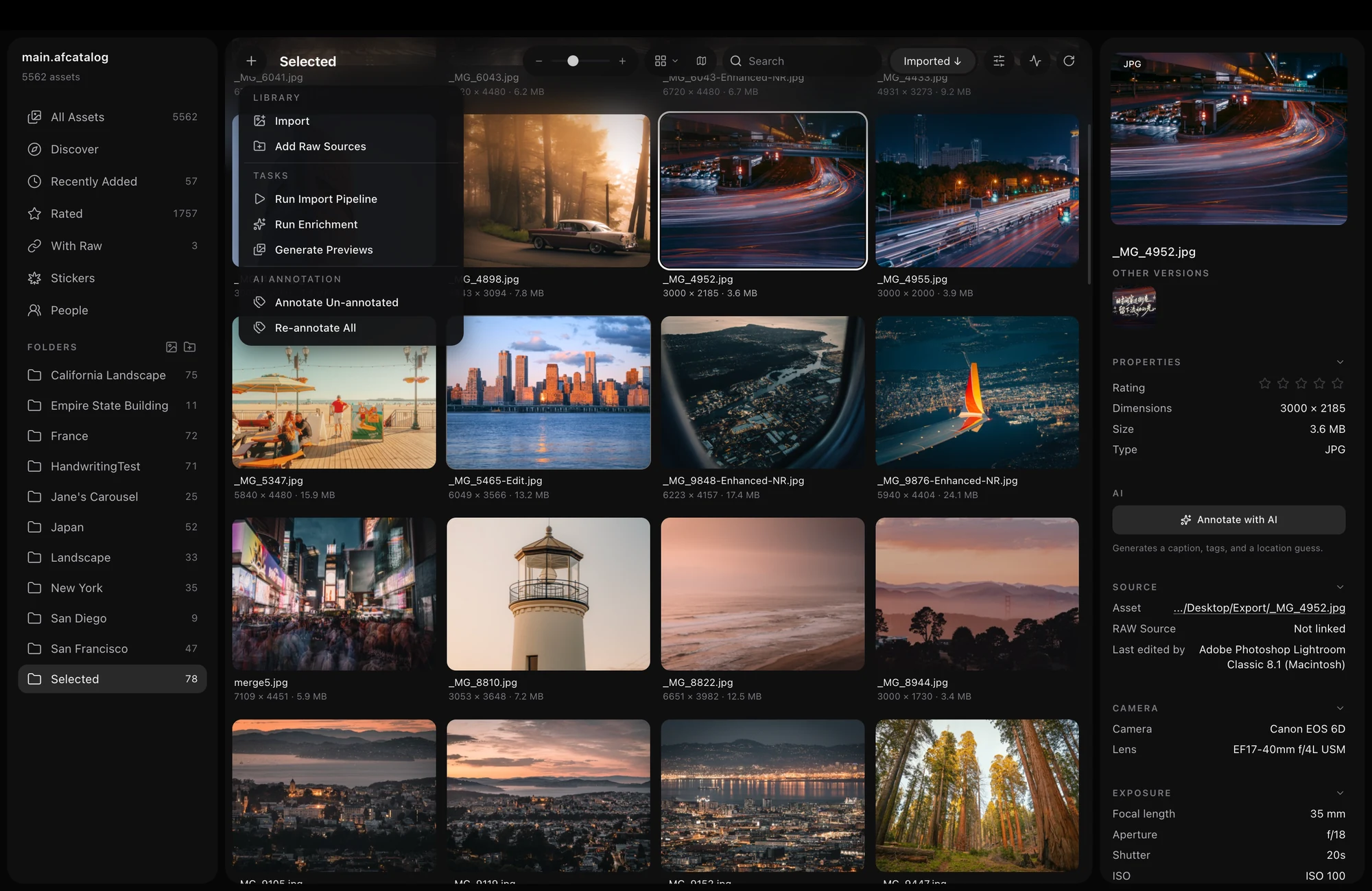
Point Import at a folder of photographs or video. Previews and metadata are built in the background, so you can start browsing straight away.
- Create or open a catalog.
- Choose a folder containing a shoot.
- Let the activity dock finish previews and metadata.
- Sort, rate, tag, and collect.
03 / Find people
Group faces on your Mac.
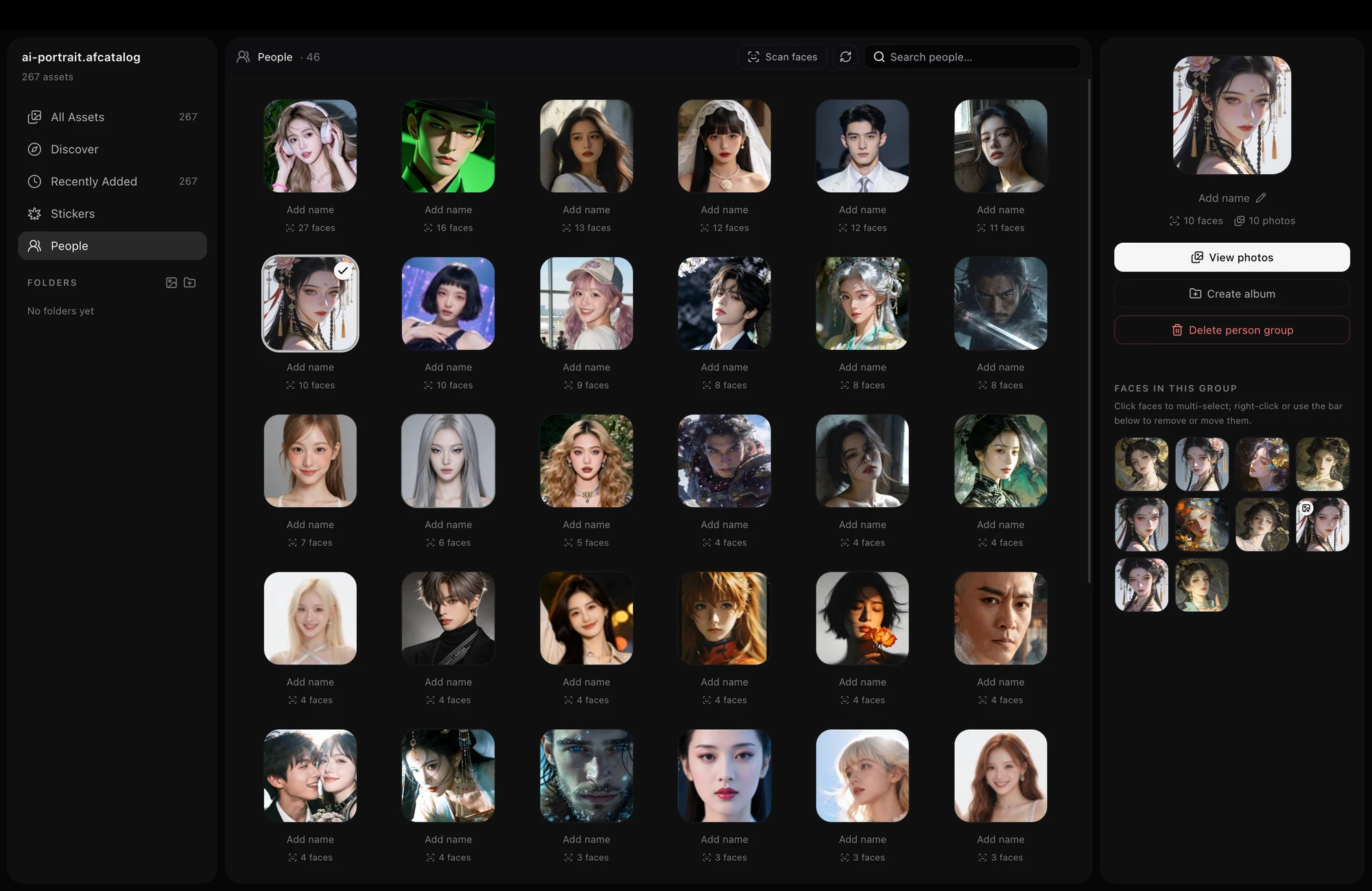
Install or select an ArcFace model in Settings, then scan the current catalog from the People view. Detection, embeddings, and person groups remain local.
- Open Settings → People and configure the local model.
- Open People and choose Scan faces.
- Name groups, choose covers, and move incorrectly grouped faces.
- Delete one or several incorrect groups; rescans keep them excluded.
04 / Edit
Finish the image where you picked it.
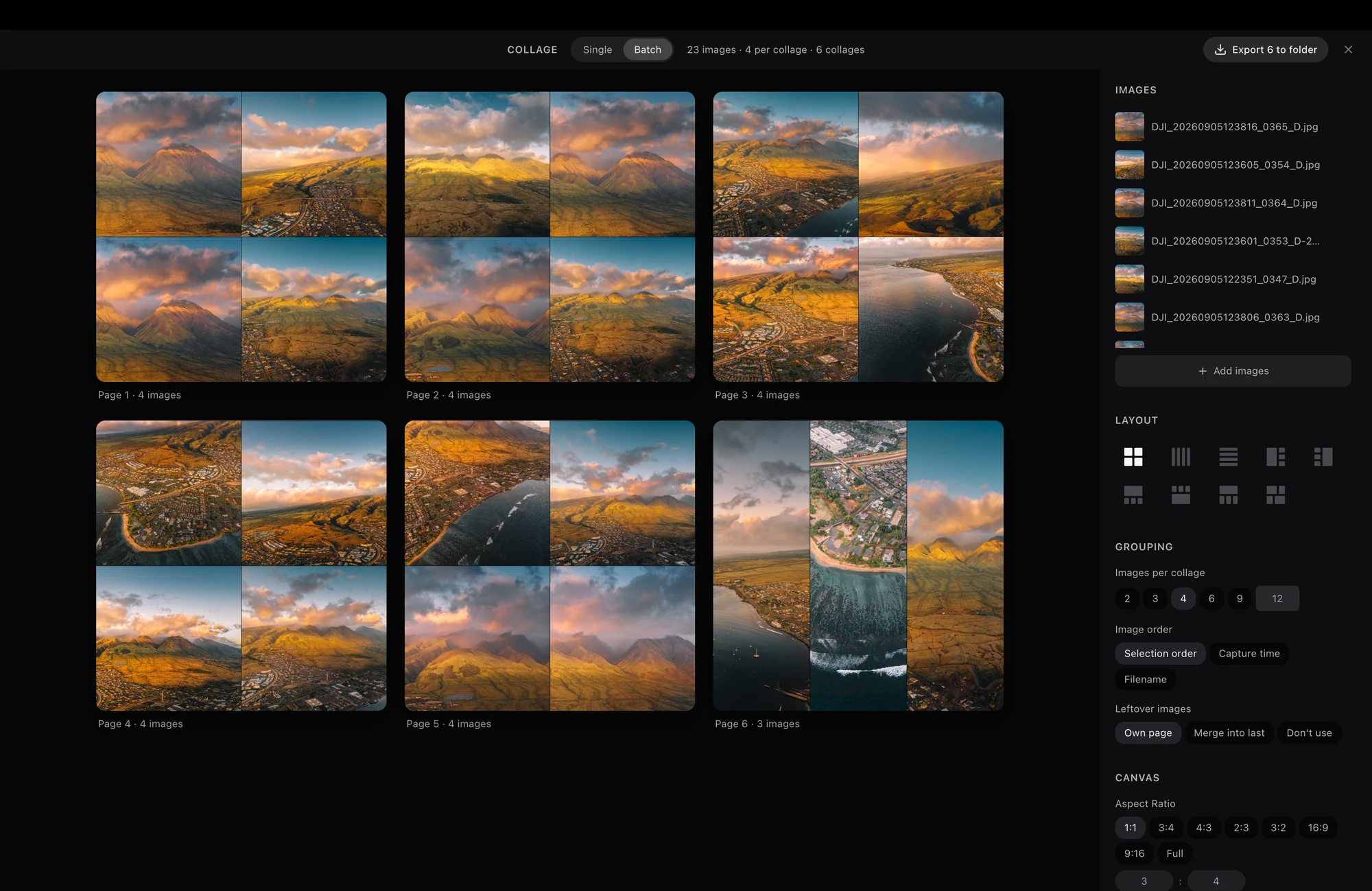
Crop, add type, make a collage, add stickers, or use a camera frame. The original is left untouched; export at the size you need.
- Crop: presets, rotation, and flip.
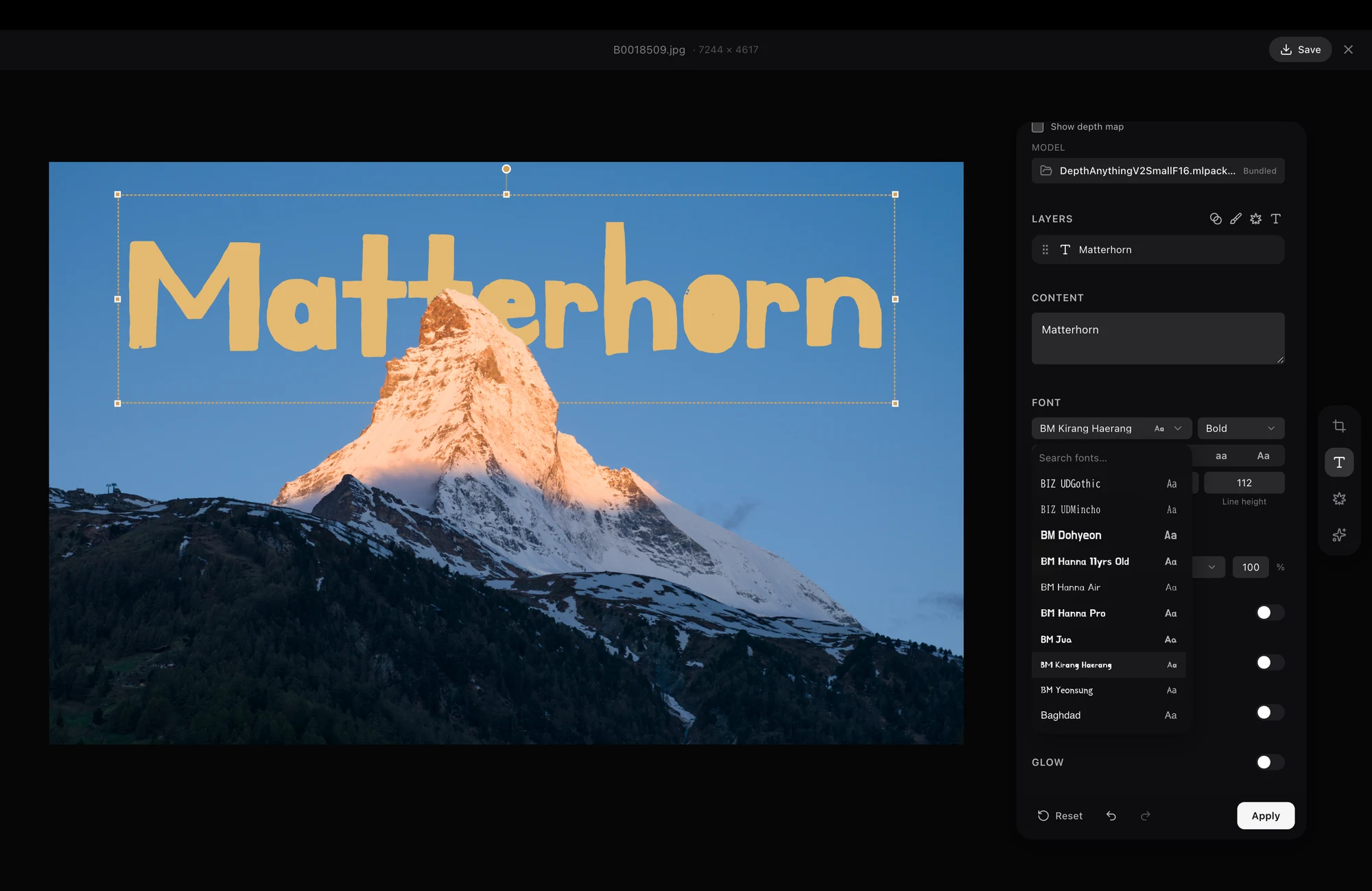
- Text: system fonts, gradients, shadows, and depth-aware placement.
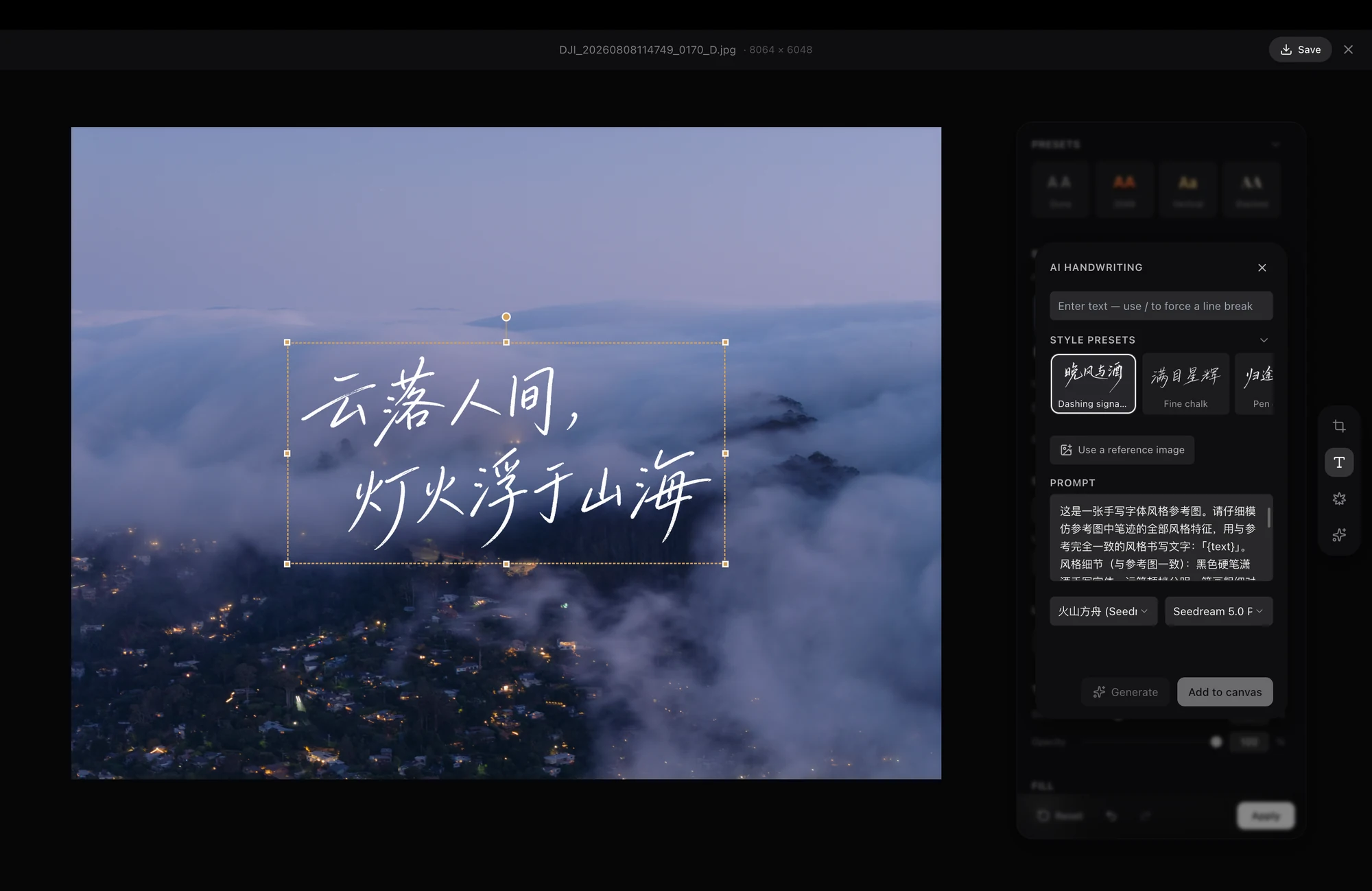
- AI Handwriting: calligraphy titles from your own AI key — 17 preset styles or your own handwriting sample as reference, recolorable after generation.
- Overlays & glow: stackable dimming washes and an outer-glow effect for text and stickers.
- Frame: EXIF-aware camera styles and brand marks.
05 / Bring your own AI
Use a provider you trust.
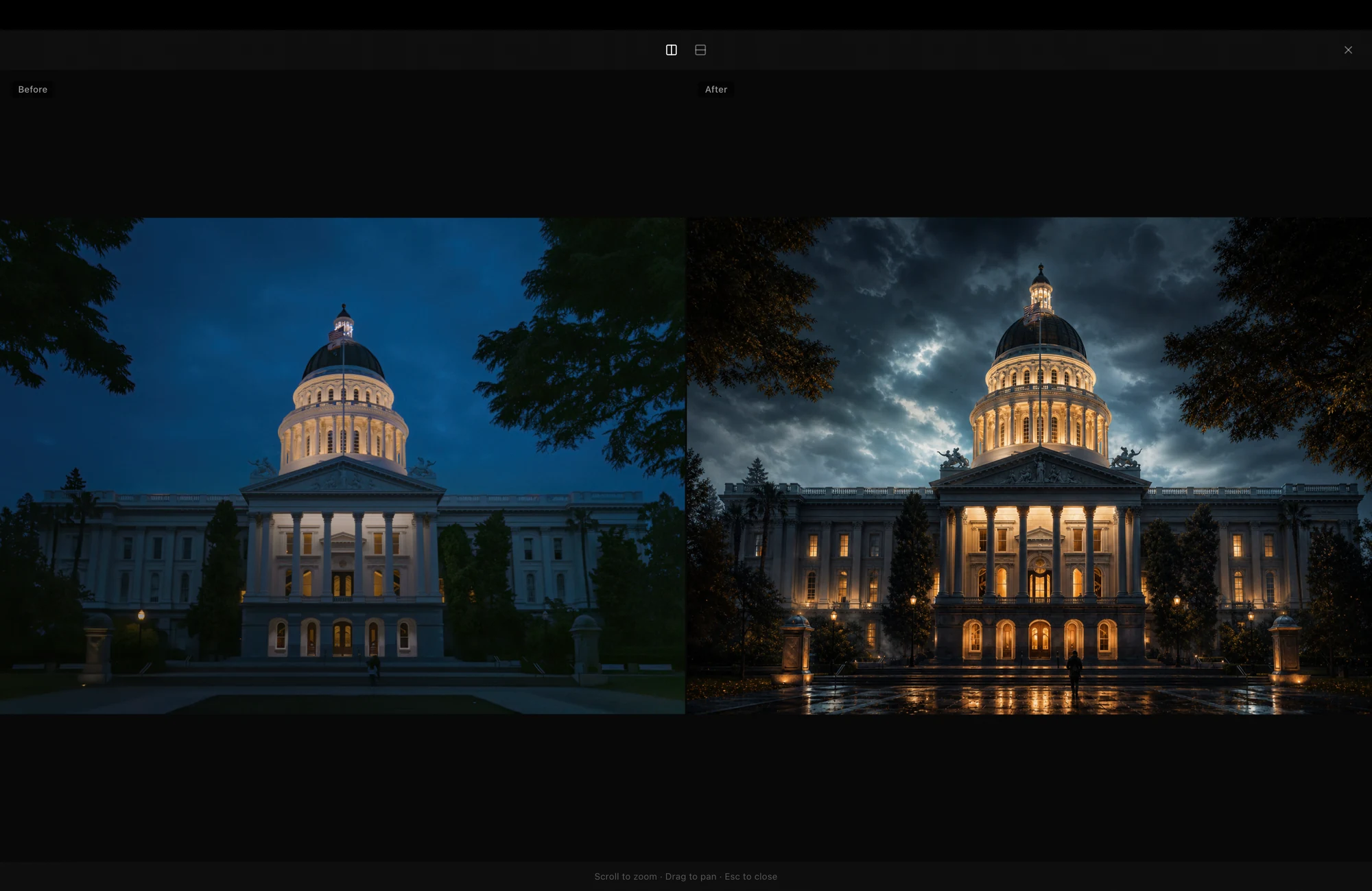
Configure AI Repaint and AI Annotation in Settings with your own API key. Requests go directly from your machine to the provider you choose.
06 / Connect an agent
Give an agent access to the library.
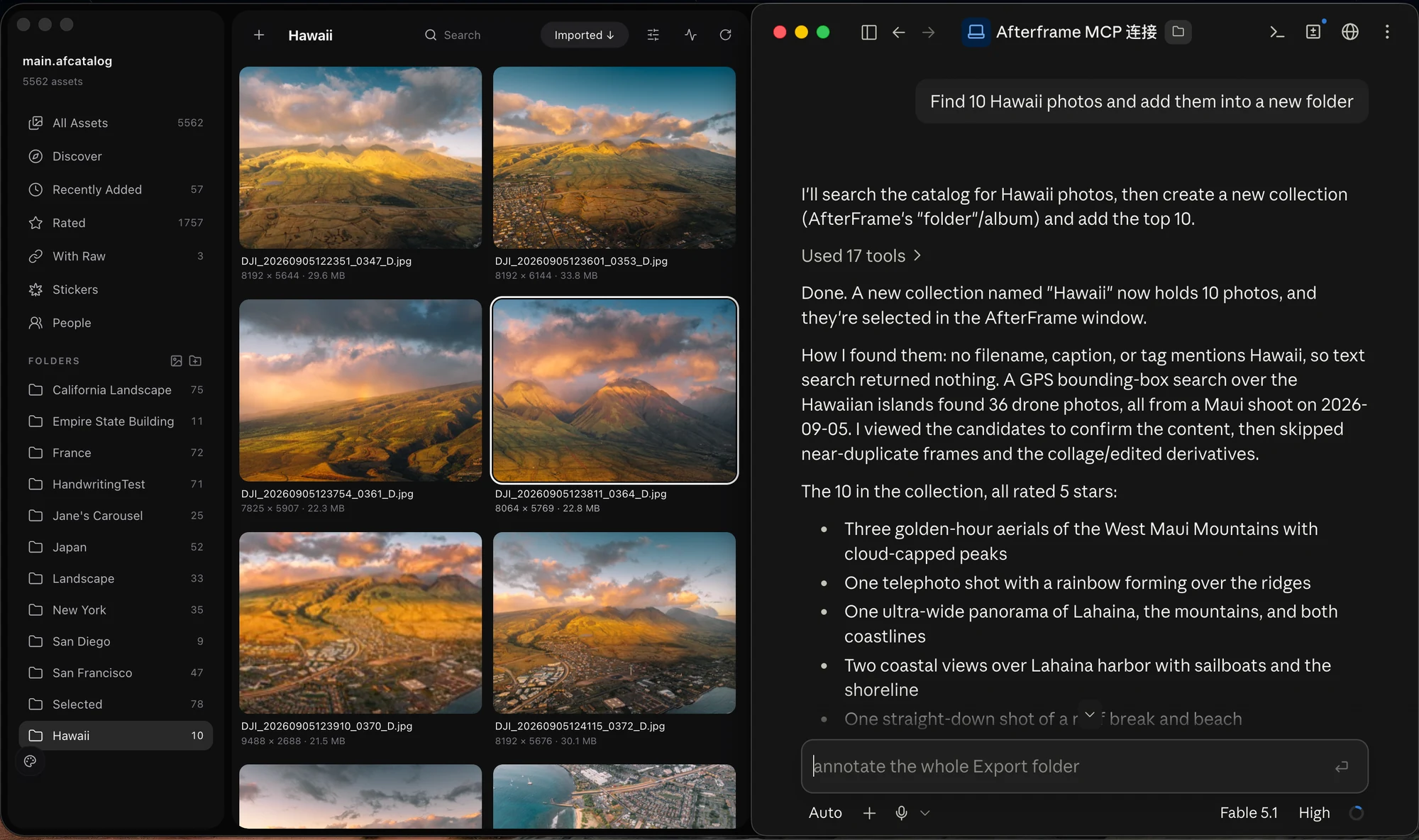
While the app is open, AfterFrame runs a local MCP server. Add it to an MCP-compatible client to search, tag, crop, export, or show photos in the app.
Claude Code
claude mcp add --transport http afterframe http://127.0.0.1:41706/mcpCodex CLI
codex mcp add afterframe --url http://127.0.0.1:41706/mcpThe service only listens on 127.0.0.1. Agent jobs stay visible and cancellable in the activity dock.